Sports Fan Engagement · Sponsor Activations · Fan Fests · Tournaments

Sports Fan Engagement Technology for Sponsor Activations

A sponsor footprint outside a stadium has minutes to earn a fan's attention. PivotXP builds the technology that does it: games scored by radar and sensors, live leaderboards, one registration that follows the fan to every station, and photo and video they take home. Our local, in-house developers write the software and wire the hardware, and our crew runs it on game day or hands it to your team.

2,000 drills
Scored offline for USAA at eight NFL training camps
1,739 footballs
Thrown at Chevy's sensor boards at the Army–Navy Game
963 pitches
Radar-clocked for Chevrolet; fastest arm 78 MPH
8 sponsor booths
Four UFC fight weeks in three cities, one crew
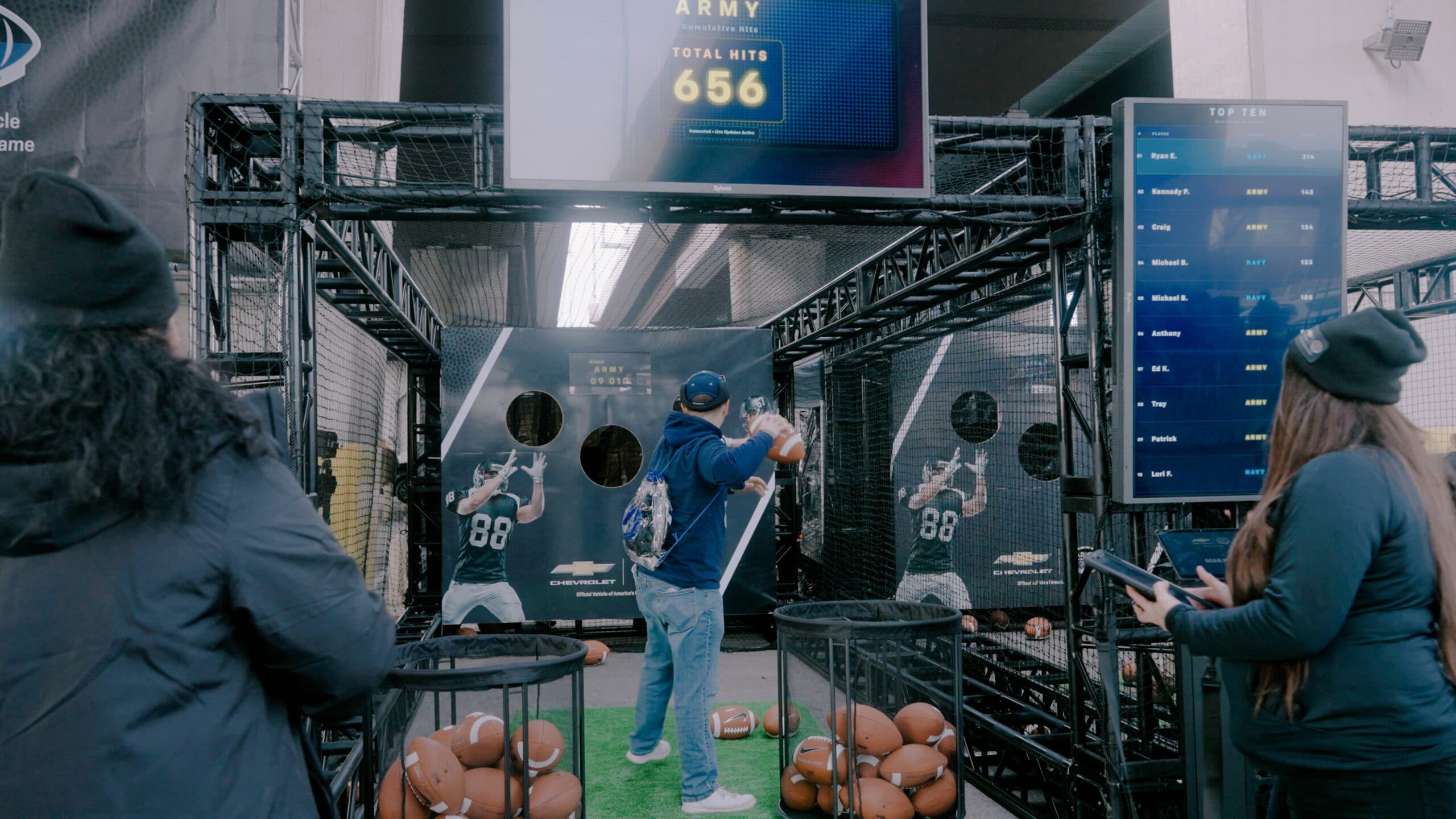
Young fan throwing a football in the Chevy Game Day Challenge cage at the Army-Navy Game

What we built, with the numbers

What we have built for sponsors and their agencies

Football, baseball, basketball and golf. The numbers are each case study's own.

Chevy Pitch Against The Machine

Chevrolet — via Jack Morton

Build 01 · Chevy Activation Tour

Chevy Pitch Against The Machine

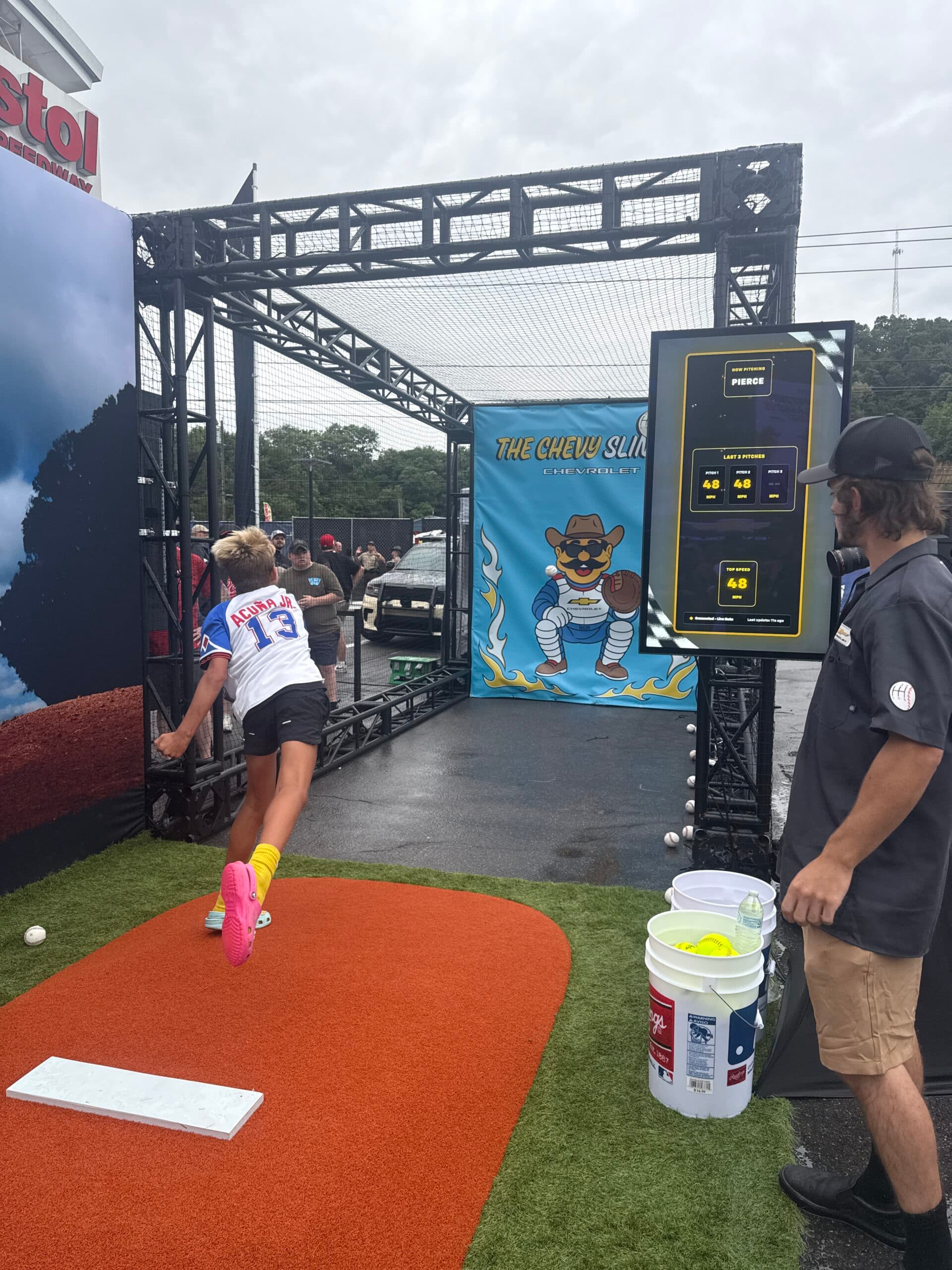
963
Pitches Thrown
321
Videos Created
78 MPH
Fastest Arm

Built: Pitch Against The Machine for Chevrolet, with Jack Morton. Fans threw against a 1968 Chevelle clocked at 96 MPH. A radar gun read every pitch, a camera recorded it at 120 frames per second, an RFID wristband started the session, and a finished branded video reached the fan's phone in under a minute. 963 pitches were thrown and 321 videos delivered.

Lesson: Give fans a number to beat. A real benchmark does more than a prize wheel to build a line.

Read the case study →
Built for Competition: Chevy's Game-Day Challenge at the Army–Navy Football Game

Build 02

Built for Competition: Chevy's Game-Day Challenge at the Army–Navy Football Game

1739
Footballs Thrown

Built: Chevy's football accuracy challenge at the Army–Navy Game in Baltimore: two 8-by-7-foot throwing boards with custom sensors that lit up and scored every ball through a hole. Fans tapped an RFID wristband to start, had 30 seconds to score, and chased a top-ten board split by Army and Navy. 1,739 footballs were thrown.

Lesson: Rivalry is free content. Score by side as well as by person and the crowd does the cheering for you.

Read the case study →
"Battle at the Combine" – USAA at NFL Training Camps

USAA — via 160/90

Build 03 · 8 NFL Training Camps — Nationwide

"Battle at the Combine" – USAA at NFL Training Camps

2,000
Completed Drills
8
NFL Training Camps
5
Combine-Style Challenges

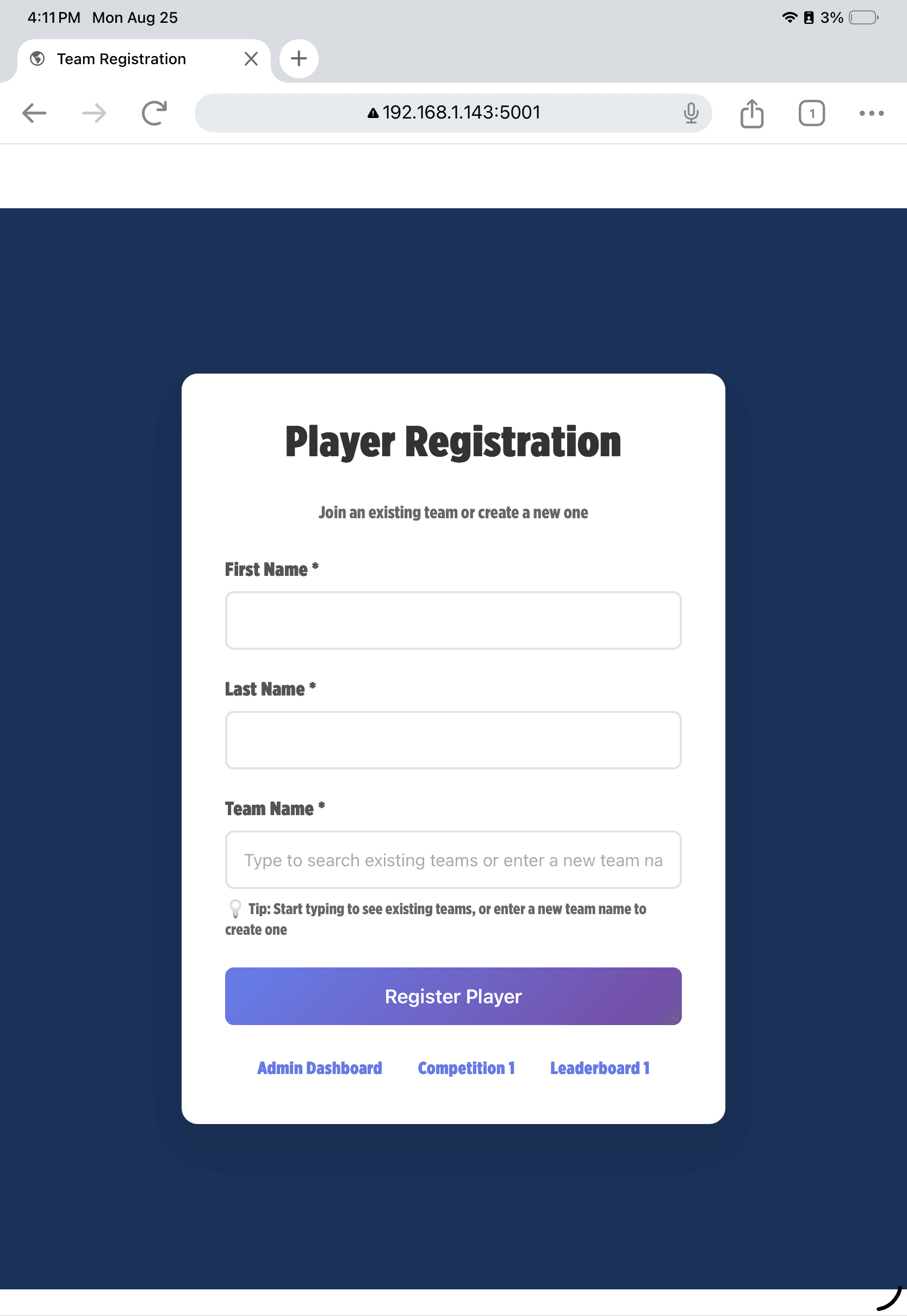
Built: Battle at the Combine for USAA, with 160over90, at eight NFL training camps. Service members signed up on iPads with profiles and teams, coaches scored five combine drills in a custom web app, and individual and team leaderboards ran on a local server with no Wi-Fi dependency. 2,000 drills were scored.

Lesson: A practice field has no network. Build it to run offline first and the tour stops being a risk.

Read the case study →
Connected by Design: Ally's Integrated Fan Experience at the ACC Women's Tournament

Ally / ESPN / Etzel

Build 04 · Duluth, GA

Connected by Design: Ally's Integrated Fan Experience at the ACC Women's Tournament

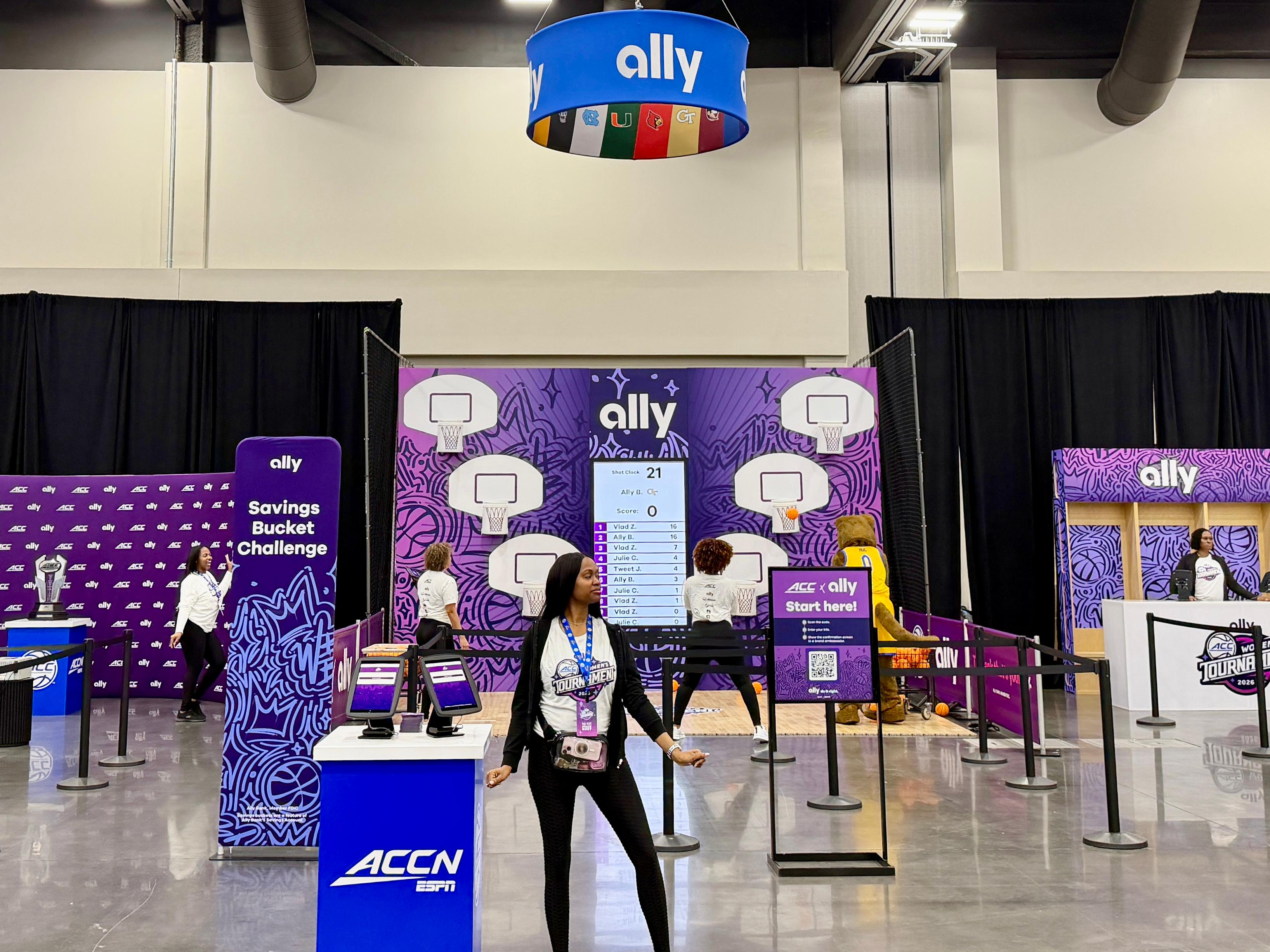
793
Gameplay Sessions
412
Photos Captured
597
Covers Printed

Built: Ally's footprint at the ACC Women's Basketball Tournament, with Etzel. Fans registered once and got a card that unlocked every station: a Pop-A-Shot with sensors on every made basket and a live top-ten board, a trophy photo that applied the fan's team logo, and an ESPN magazine cover print. The system logged 793 games, 412 trophy photos and 597 printed covers.

Lesson: One credential for the whole footprint is what makes the sponsor's data usable afterward.

Read the case study →
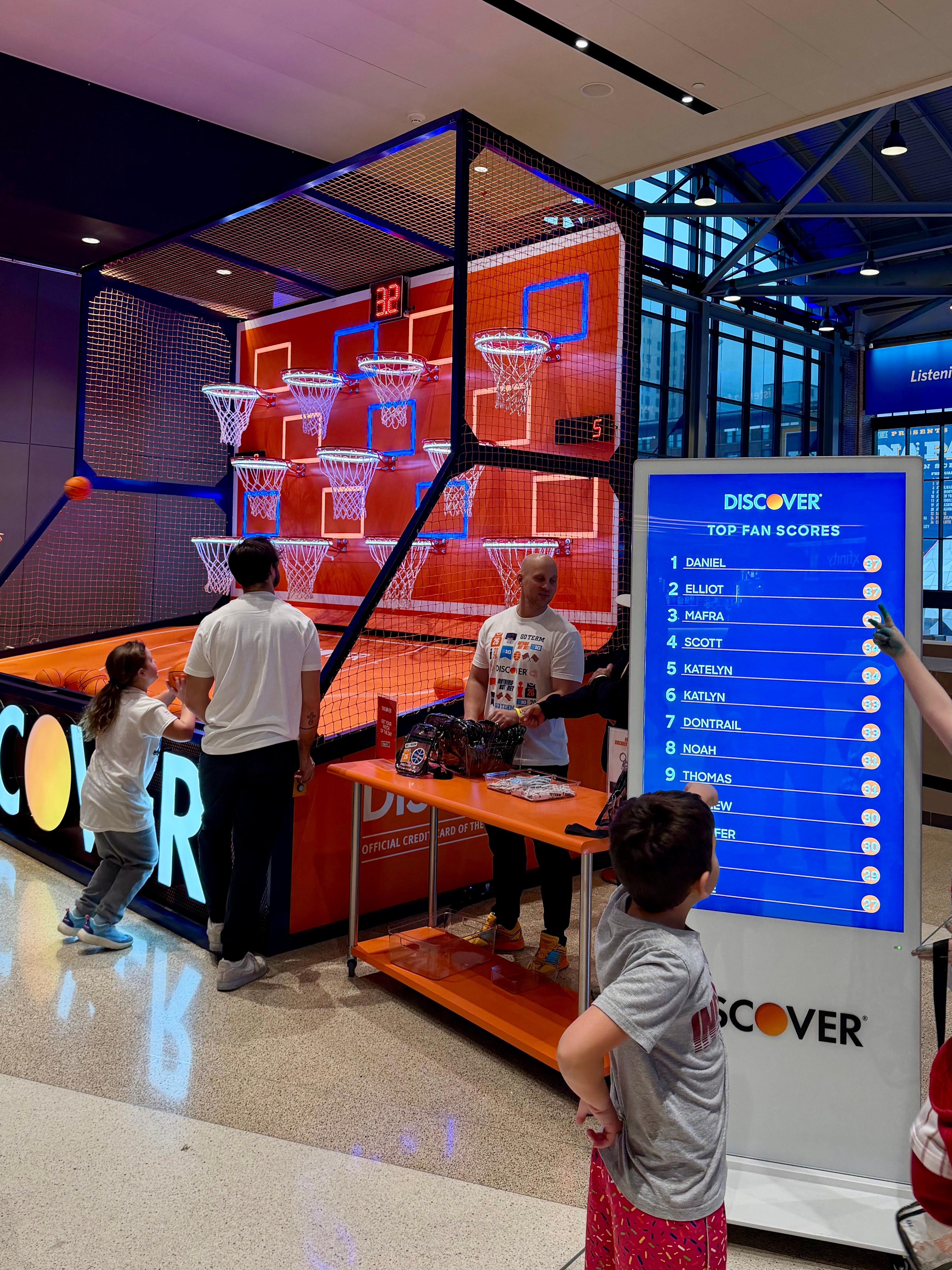
Lighting Up the Tournament: Discover's LED Fan Experience

Discover / rEvolution

Build 05 · Indianapolis, IN & Chicago, IL

Lighting Up the Tournament: Discover's LED Fan Experience

2,995
Total Outputs
2
Cities
Top 13
Live Leaderboard

Built: Discover's activation at the Big Ten women's and men's basketball tournaments in Indianapolis and Chicago, with rEvolution: an LED room that lit in the fan's team colors for a photo or GIF, and a Pop-A-Shot leaderboard that ranked the top 13 scores and totaled points by team across days. 2,995 photos and GIFs were created across the two cities.

Lesson: Total the scores by school. Fans come back to move their team up, not just themselves.

Read the case study →
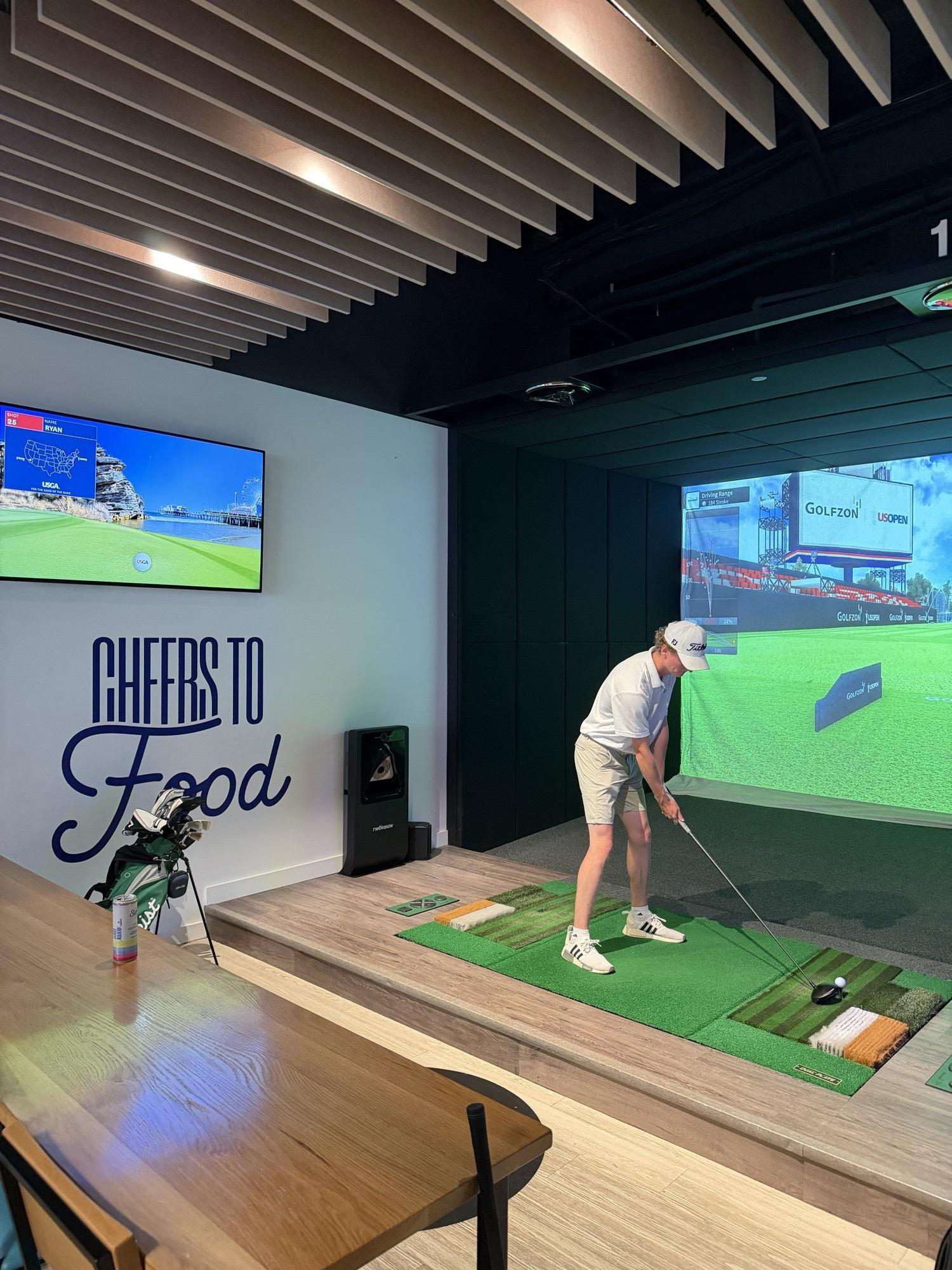
The Cross Country Scramble: USGA's Coast-to-Coast U.S. Open Simulator Journey

USGA · 160over90

Build 06 · Nationwide

The Cross Country Scramble: USGA's Coast-to-Coast U.S. Open Simulator Journey

20,000+
Swings to Cross America
Coast to Coast
Two Championships
Regional
Themed Backgrounds

Built: The Cross Country Scramble for the USGA, with 160over90. Every swing at golf-simulator venues nationwide moved one shared journey across a map of America, with regional backdrops that changed along the route. It took more than 20,000 swings to finish the trip.

Lesson: A shared goal across venues gives every fan a reason to take one more swing.

Read the case study →

What fans do at the footprint

Every build is custom to the sponsor's brand guidelines and the property's rules. These are the pieces we combine.

Radar and speed games

Pitch speed, throw speed and shot speed read by radar, with the number on screen the moment the ball lands.

Sensor-scored accuracy games

Throwing boards, Pop-A-Shot and targets wired with sensors, so the score is real and nobody keeps it by hand.

Live leaderboards

Top scores by person, team, school or rivalry side, on booth TVs or an LED wall, with totals that carry across days and cities.

One registration, every station

Fans register once on their phone or a tablet and use an RFID wristband, card or QR code at each stop.

Photo, video and trading cards

Trophy photos, robot arm slow-motion video, AI photo kiosks and printed fan trading cards, sent to the phone in the sponsor's art.

Combine and skills challenges

Multi-station drills scored by staff on tablets into one system, with team standings and a winner reveal.

What arrives at the venue

  • The games and the scoring software, built to the sponsor's brand guidelines
  • Radar, sensors, buttons, cameras and touchscreens, wired and burned in before they ship
  • Registration with RFID wristbands, cards or QR codes as the fan's credential
  • Live leaderboards sized for the footprint's screens
  • A local server so play continues without venue Wi-Fi, plus Starlink or bonded cellular when sharing needs to be online
  • Photo and video delivery by text, email or QR, with age rules built into the workflow where the property requires them
  • A results export for the sponsor recap: plays, scores, registrations and shares by station and by day

For the game hardware on its own, see sensor games and live leaderboards. For prediction games and season-long loyalty programs, see fan games.

How a build goes

  1. 1. Send the brief

    The property, the sponsor, the dates and cities, the footprint size, and what the sponsor wants fans to do or remember.

  2. 2. Scoped estimate, same day

    A line-item estimate with the games, the scoring, the registration and the hardware named.

  3. 3. Build and play-test

    Proven formats go live in days. New mechanics get a playable prototype on the real hardware before anything ships.

  4. 4. Run game day

    PivotXP techs run it on site, or cases ship with a setup guide and video for your team.

  5. 5. Report

    Plays, scores, registrations and shares, by station, day and city, ready for the sponsor recap.

No templates. Ever.

Every deployment is a custom build for your company.
Your brand guidelines, not ours.

Nothing we ship is a product with your logo dropped on it. Each program is designed and built from scratch for the brand running it, by our own local, in-house developers (nothing outsourced, nothing offshore), to the brand guidelines your marketing team already enforces. Your typefaces, your colors, your motion, your tone, your legal lines. Ours never appear.

Bring the brand guidelines to the kickoff call. No formal guidelines yet? We work from your logo files and website and send a style sheet for sign-off before the build starts.

Your typography and color system

We build to the brand book: approved typefaces, exact color values, logo clear space, and lockups. No near-miss colors, no fallback fonts.

Your voice on every screen

Start screens, prompts, consent language, share pages, and texts are written in your tone, then approved by your team before anything ships.

Your motion and sound

Transitions, idle loops, win states, and audio follow your motion and sound rules, or stay quiet if the brand says so.

Your legal and compliance lines

Official rules, disclaimers, age gates, and opt-in copy placed where your counsel wants them, word for word.

Your look on the hardware

Wraps, enclosures, and fabrication finished in the brand palette and materials. Nothing on the floor says PivotXP.

Your sign-off before it ships

You review a working build, not a mockup, and approve it against your guidelines before it goes on a truck.

Proof, not promises

The case studies

A radar pitch game with automatic video, a combine competition scored offline at eight camps, and a connected footprint on one fan record.

All case studies

What’s on the quote

What's on a sports activation quote.

No mystery line items. Every estimate is built from this list, so you can see what the build covers and what is optional.

Every estimate is built from these same lines, so nothing shows up on the quote that you have not seen here. Send dates, city, and what you need and you will have a line-item estimate the same business day.

Game software

One fixed build fee per mechanic, built to the sponsor's brand guidelines.

Sensors and game hardware

Radar, sensors, buttons, boards and displays, itemized.

Scoring engine and leaderboards

Your rules, team and rivalry totals, ranked displays and exports.

Registration and credentials

Fan registration plus RFID wristbands, cards or QR codes.

Photo and video experiences

Kiosks, robot arm camera, prints and delivery, when the footprint includes them.

Connectivity

Local server for offline play; Starlink or bonded cellular for sharing and point of sale.

PivotXP techs on site

Priced per day, per city.

Shipping and travel

Quoted round trip per stop; travel billed at cost.

How custom builds are quoted

What a custom build quote contains.

A custom interactive is a software product with hardware attached, and the quote reads that way: a fixed price for the scoped build, hardware itemized as pass-through, and the deployment, support, and change-order terms written down before anyone starts.

Nine lines, always in this order, so you can compare two of our quotes against each other and never against a booth rental. Send the concept deck and a budget bracket and the first version comes back the same business day.

1. Discovery and experience design

The brief becomes a build spec: guest flow, screens, scoring or capture logic, data fields, and the hardware list. Waived on returning accounts, but it always appears.

2. Software build

One fixed fee for the scoped build, with the complexity tier named: a new skin on an existing engine, a new interaction with data capture, or a multi-mode build with sensors, AI, or integrations.

3. Hardware

Itemized as pass-through: screens, kiosks, readers, sensors, printers, cases. Your team or your fabricator can supply any of it.

4. Deployment, burn-in, and configuration

Kiosk prep, pre-ship test, and the burn-in run on the real program before it leaves.

5. On-site technician days and travel

Priced per tech per day at one rate for every client; travel at cost with a range quoted up front.

6. Shipping and road cases

Round trip, parcel or freight, with return labels.

7. Post-event support window

Remote support for a set window after the event, with an optional hosting and support subscription for programs that keep running.

8. Change orders and rush terms

Written before the work, at a rate printed in the contract. Nothing is "not a problem" without a line, even when that line is waived.

9. Contingency

Added when your procurement matrix asks for one, shown as its own line.

Lead times

How much runway each kind of project needs.

Kiosk or Starlink rental

Ships the next business day after the contract is signed, timed to arrive before your setup date.

Brand an existing kiosk

Days once your art arrives. Wrap art, overlays, share page, and AI creative. Art specs sent at kickoff.

Custom software build

Days for a proven format, a few weeks for something new. Local, in-house developers, never outsourced, scenario-tested before it ships.

Hardware + software concept

Weeks, not months. Software and sensor integration in house; fabrication gets a real date at the quote stage.

Clickable prototype for a pitch

Days. Enough to win the room before anything is built.

Tight timeline? Say so on the form. Rentals and returning programs move in days; we will tell you honestly what a new build can hit.

FAQ

What is sports fan engagement technology?+

It is the hardware and software behind a sponsor's fan activation: games scored by radar or sensors, live leaderboards, registration that ties each fan to their scores and photos, and the photo or video they take home. PivotXP builds all of it in house and runs it on site.

Which sports properties has PivotXP worked at?+

Published work includes NFL training camps, the Army–Navy Game, ACC, SEC and Big Ten basketball tournaments, the NCAA men's tournament, NASCAR's Daytona 500 and Championship Weekend, UFC fight weeks, WWE World at WrestleMania, the ACC Baseball Tournament and a USGA campaign for the U.S. Open, for sponsors including Chevrolet, USAA, Ally, Discover, Coca-Cola and Invesco.

Which agencies do you work with on sports activations?+

Sports work on this page was delivered with 160over90, Jack Morton, Etzel and rEvolution. PivotXP works white-label under the agency or directly with the sponsor.

Can the games run without stadium Wi-Fi?+

Yes. Games and leaderboards run on a local server that ships with the build, as they did at eight NFL training camps for USAA. When photo sharing or point of sale needs to be online, we add Starlink or a bonded cellular kit, as we did for USAA's footprint at the Army–Navy Game.

Can one registration cover every station in the footprint?+

Yes. Fans register once and use a wristband, card or QR code at each station, so scores and photos land on the same record. Ally's ACC Women's Tournament footprint ran on one card per fan, and Coca-Cola's Daytona 500 footprint tied its photo kiosk and leaderboards to one registration.

Can you run several sponsors at the same event?+

Yes. Across four UFC fight weeks with 160over90, one PivotXP crew ran eight separately branded sponsor photo activations side by side in three cities.

Can it tour to multiple cities or venues?+

Yes. The same build has run at eight NFL training camps, at Big Ten tournaments in two cities, and across UFC fight weeks. Leaderboards can keep city-by-city and season-long totals.

How do you handle fans under 13?+

Age rules are built into the workflow when the property or sponsor requires them. At the ACC Baseball Tournament, guests over 13 received a digital trading card along with the print, and guests under 13 received the print only.

How far ahead do you need the brief?+

Proven formats go live in days once brand assets arrive. New game mechanics take weeks, not months, because our developers are in house. Send the dates and we will tell you what fits.

Activating a sponsor this season? Send the brief.

The property, the dates and cities, the footprint, and what fans should do. You will have a scoped, line-item estimate the same business day.