Custom Builds · Sensor + Throw Games · Fabricated and Programmed In House

Sensor Games With Real Scores and a Name on Every Play

Radar guns, break-beam and impact sensors, illuminated buttons, and the software that turns a throw, a press, or a shot into a score, a leaderboard rank, and a record on the guest's profile. Fabrication, cases, and code under one roof, so new mechanics take weeks, not months.

Real scoring
Radar, sensors, or buttons; no staffer guessing
Every play recorded
RFID or registration binds plays to guests
Resets in seconds
Built for a line, not a demo
Weeks, not months
Fabrication and software under one roof
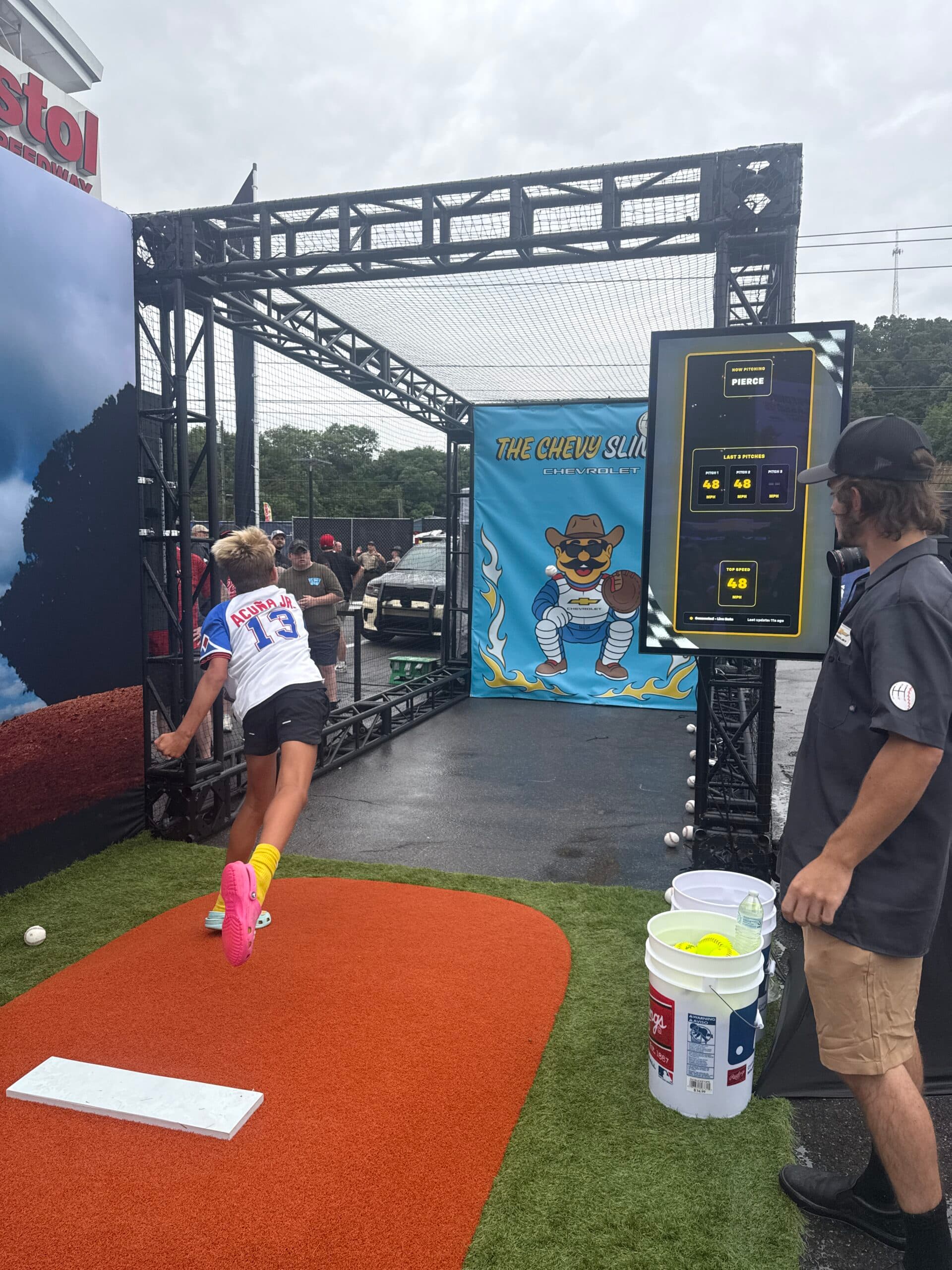
Pitch Against the Machine: radar-tracked baseball pitch game built for Chevrolet

What we built, with the numbers

Games we built and what they counted

Five builds, five mechanics, every one scored by hardware and bound to a guest record. Numbers are the case study's own.

Chevy Pitch Against The Machine

Chevrolet — via Jack Morton

Build 01 · Chevy Activation Tour

Chevy Pitch Against The Machine

963
Pitches Thrown
321
Videos Created
78 MPH
Fastest Arm

Built: A Stalker radar gun reading each pitch, a 120 fps camera, an RFID wristband opening the session, and software that composited the throw against a 1968 Chevelle's 96 mph benchmark and delivered a branded video to the fan's phone in under a minute.

Lesson: When the hero is a real object on site, build the data around it. The speed reading made the car the opponent, not the backdrop.

Read the case study →
"US Mode" – UScellular Experience at Summerfest

UScellular / rEvolution

Build 03 · Milwaukee, WI

"US Mode" – UScellular Experience at Summerfest

648,112
Buttons Pressed
15 ft
Custom Boombox Build
<10 sec
Game Reset Time

Built: A 15-foot boombox with 40 backlit buttons, a 45-second game window, phone-free entry, a local hardware stack with no app and no venue internet, and a reset under ten seconds so the line kept moving at Summerfest.

Lesson: Reset time is the hidden capacity number. A game that resets in ten seconds serves three times the crowd of one that resets in thirty.

Read the case study →
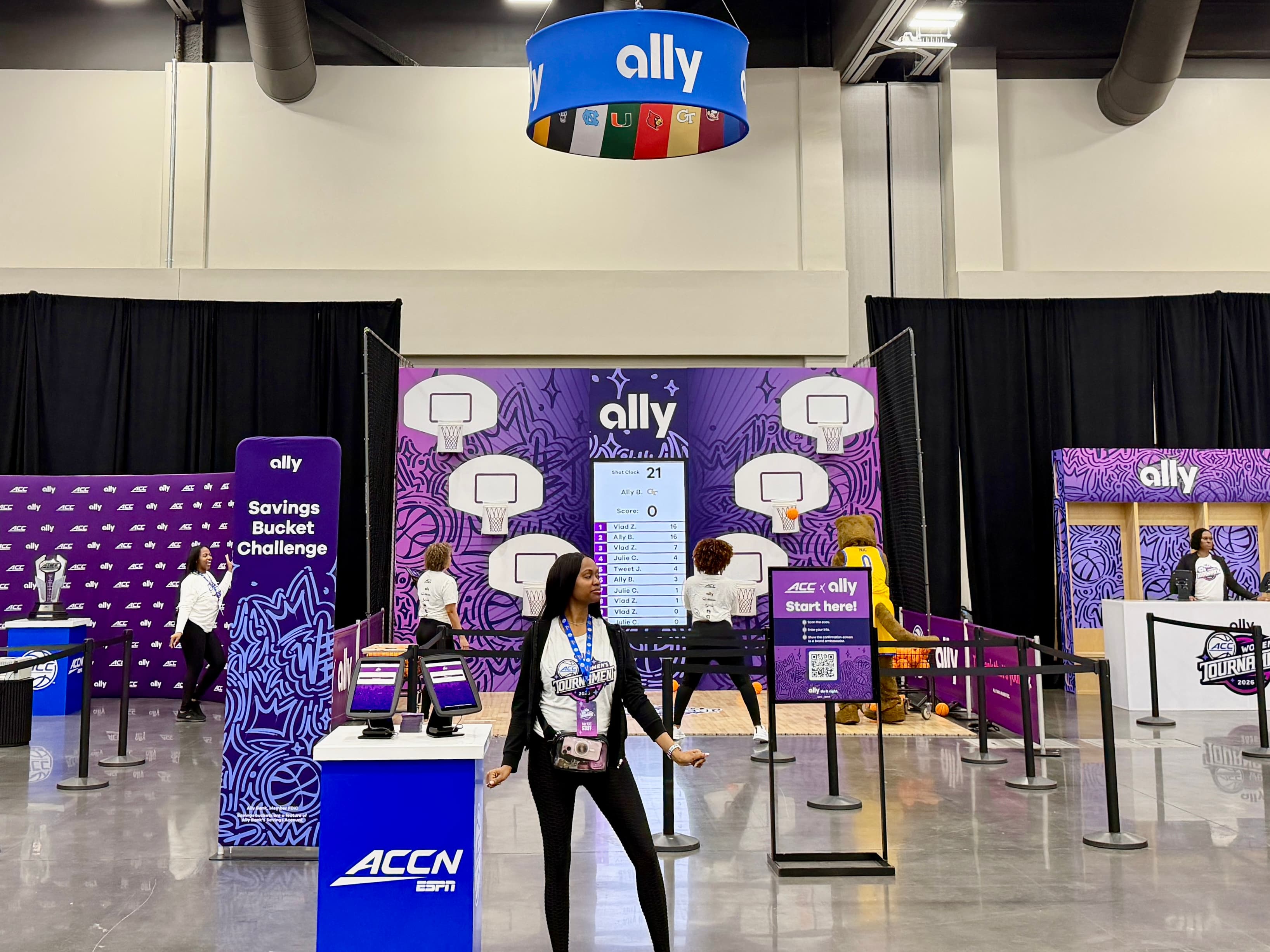
Connected by Design: Ally's Integrated Fan Experience at the ACC Women's Tournament

Ally / ESPN / Etzel

Build 04 · Duluth, GA

Connected by Design: Ally's Integrated Fan Experience at the ACC Women's Tournament

793
Gameplay Sessions
412
Photos Captured
597
Covers Printed

Built: Sensors installed on a Pop-A-Shot counted every made basket, put the guest's name and school on screen, and ranked them on a live top-10 with 30 seconds on the clock, all opened by one scan of the guest's Ally registration card.

Lesson: The registration layer is the product. The game is what makes guests want to scan.

Read the case study →
Can't Cheat Death: Final Destination Interactive Horror Experience

Final Destination: Bloodlines

Build 05 · Multi-City Mobile Tour

Can't Cheat Death: Final Destination Interactive Horror Experience

1,273
Times Cheated Death
Multi-City
Mobile Tour
Custom
Waiver + Scoring Engine

Built: A multi-city challenge course with a digital waiver at intake, a custom scoring engine with real-time score logic across themed stations, and branded capture at the end, built for a month-long film-marketing tour.

Lesson: If the mechanic has risk, the waiver is part of the software. Collect it once, digitally, and let the scoring engine carry it.

Read the case study →

Mechanics we build most

Every one is custom to the client's products and brand guidelines. These are the mechanics that have proven to stop traffic.

Radar pitch and throw cages

A radar gun reads speed, software scores against a benchmark, a camera captures the throw, and the video lands on the guest's phone.

Sensor throw walls

Fabricated boards with scored holes, impact or break-beam sensors behind each one, lit feedback, and a live display at the station.

Button and reaction walls

Illuminated buttons on a fabricated wall or object, scored by speed, sequence, or count, with a reset under ten seconds.

Scored Pop-A-Shot and skill games

Sensors retrofitted onto proven carnival mechanics so every shot counts, with a name on screen and a live leaderboard.

Challenge courses and timed stations

Multi-station courses with a scoring engine, digital waiver, and a clock, for tours and fan fests.

Golf, soccer, and sports simulators

Tablet or sensor entry on a simulator feeding a shared scoreboard across venues, as in the USGA Cross Country Scramble.

What ships in the cases

  • The fabricated game: boards, walls, cages, or enclosures built as hard panels that unfold, lock, and plug in, designed for a tour crew to run
  • Sensors, radar, buttons, and lighting, wired to a controller we program and test before it ships
  • The game computer and the station display, preloaded, booting straight into the game and resetting itself
  • A staff tablet to start rounds, handle edge cases, and reset
  • Live leaderboard, RFID or registration binding, and a CSV export or CRM push
  • Branded graphics, sound, and animations built to your art specs, never from a template
  • Road cases, printed setup guide, setup video, remote diagnostics, and a support line for show hours

Need the leaderboard online or the plays synced live? Pair the game with a bonded cellular kit or a Starlink kit. The game itself runs offline.

How a build goes

  1. 1. Send the brief

    The mechanic you are picturing, the footprint, dates, and the number the client will judge it by: plays, captures, or dwell.

  2. 2. Line-item estimate, same day

    With a concept render when the kit allows. Enough to win the room.

  3. 3. Prototype, fabricate, test

    New mechanics get a working prototype first, then fabrication and scenario testing on the actual sensors.

  4. 4. Ship or staff

    Cases ship to the advance warehouse with a guide and a video, or a PivotXP tech runs the first stop and hands off.

  5. 5. Redeploy

    Next event, new creative and prizes on the same build. A redeploy line, not a new build.

No templates. Ever.

Every deployment is a custom build for your company.
Your brand guidelines, not ours.

Nothing we ship is a product with your logo dropped on it. Each program is designed and built from scratch for the brand running it, by our in-house developers and fabricators, to the brand guidelines your marketing team already enforces. Your typefaces, your colors, your motion, your tone, your legal lines. Ours never appear.

Bring the brand guidelines to the kickoff call. No formal guidelines yet? We work from your logo files and website and send a style sheet for sign-off before the build starts.

Your typography and color system

We build to the brand book: approved typefaces, exact color values, logo clear space, and lockups. No near-miss colors, no fallback fonts.

Your voice on every screen

Start screens, prompts, consent language, share pages, and texts are written in your tone, then approved by your team before anything ships.

Your motion and sound

Transitions, idle loops, win states, and audio follow your motion and sound rules, or stay quiet if the brand says so.

Your legal and compliance lines

Official rules, disclaimers, age gates, and opt-in copy placed where your counsel wants them, word for word.

Your look on the hardware

Wraps, enclosures, and fabrication finished in the brand palette and materials. Nothing on the floor says PivotXP.

Your sign-off before it ships

You review a working build, not a mockup, and approve it against your guidelines before it goes on a truck.

Proof, not promises

The sensor game case studies

A radar pitch against a muscle car, sensor-scored throw walls with a rivalry leaderboard, and a 40-button boombox that logged 648,112 presses.

All case studies

What’s on the quote

What's on a sensor game quote.

No mystery line items. Every estimate is built from this list, so the client sees what the build covers and what is optional.

Every estimate is built from these same lines, so nothing shows up on the quote that you have not seen here. Send dates, city, and what you need and you will have a line-item estimate the same business day.

Live custom leaderboard

Branded TV or LED view, iPad entry, ranking rules, prize windows, exports.

Sweepstakes / spin-to-win microsite

Official rules support, PII capture, admin export, and hosting for the program term.

Custom kiosk software

Trivia, quizzes, configurators: touchscreen app, admin panel, analytics. Hardware listed separately.

Sensor games + button walls

Touring builds including fabrication, road cases, and testing.

Software redeploy for a returning program

New creative, new dates, same proven build.

PivotXP tech on site

Optional, priced per day. Hard-panel builds are designed to run with your tour manager.

Travel

Billed at cost, with a typical range quoted before you commit.

Lead times

How much runway each kind of project needs.

Kiosk or Starlink rental

Ships the next business day after the contract is signed, timed to arrive before your setup date.

Brand an existing kiosk

Days once your art arrives. Wrap art, overlays, share page, and AI creative. Art specs sent at kickoff.

Custom software build

Days for a proven format, a few weeks for something new. In-house developers, scenario-tested before it ships.

Hardware + software concept

Weeks, not months. Fabrication, sensors, cases, and software built together under one roof.

Clickable prototype for a pitch

Days. Enough to win the room before anything is built.

Tight timeline? Say so on the form. Rentals and returning programs move in days; we will tell you honestly what a new build can hit.

FAQ

How accurate is the scoring?+

Hardware-accurate. Radar guns read speed directly, break-beam and impact sensors register each hit, and buttons register each press. Staff never estimate a score. We scenario-test every sensor before the build ships and the tablet lets staff correct an edge case without stopping the line.

Can the game run outdoors?+

Yes. Throw walls and cages are built for fan fests and tailgates: weighted bases, weather-rated electronics, sun-readable displays, and power planning for generators or battery. Tell us the climate and we spec it.

Does it need internet?+

No. The game, the scoring, and the leaderboard run on local hardware. Plays are stored on the machine and exported at the end of each day. For a live online leaderboard or instant delivery of videos, we add a bonded cellular or Starlink kit.

How does a play get tied to a guest?+

Guests register once, on a tablet, by QR, or with an RFID wristband or card, and every play, score, and video lands on that record. The client gets one clean export, or a direct push to their CRM, with consent captured at registration.

How long does a sensor game take to build?+

A proven mechanic such as a scored Pop-A-Shot or a timed button challenge goes live in days once brand assets arrive. A new fabricated mechanic, like a throw wall or a radar cage, takes weeks, not months, because fabrication and software are both in house. A clickable or physical prototype for a pitch takes days.

Can we reuse it at the next event?+

Yes. The build is yours to redeploy. New creative, new prizes, new dates on the same proven game is a software redeploy line, not a new build, and the hardware ships in the same cases.

Who runs it on site?+

Hard-panel builds are designed for your tour manager and brand ambassadors to run from the tablet. We ship a guide and a setup video and can see the machine remotely. A PivotXP tech on site is a per-day option for the first show of a new build.

What does it cost?+

Every quote is built from the lines on this page: the game build, fabrication, sensors, leaderboard and capture layer, shipping, and optional staffing. Send the mechanic, the footprint, and the dates and you will have a line-item estimate the same business day.

Have a mechanic in mind? Send the sketch.

A napkin drawing is enough. Footprint, dates, and the number the client cares about. You will have a line-item estimate and a concept render.