Programs + partnerships · Lane 3

One agreement for the season. Every stop is a redeploy, not a rebuild.

The agencies that ship the most with us do not book events. They sign a program: a committed event count, a licensed software core, per-event deployment at one rate, a support subscription between shows, and a payment schedule that matches the calendar. The brand gets the same crew and the same tested build in every city. The agency gets one SOW to approve and one number to mark up.

What a program agreement contains

Seven lines, signed once.

Each line below is on every program agreement, so a producer can read the structure before the first number arrives. There are no prices on this page: the structure is standard, the numbers follow the event count, the mechanic, and the budget bracket your client has set.

Send the Season Calendar

Committed event count

The season or tour is written down once: dates, cities, footprints. Crew and gear are held for it, and nothing is re-quoted stop by stop.

Licensed cores

The leaderboard, trading-card engine, registration backend, or kiosk OS your program runs on is licensed for the term and redeployed at each stop with new creative and rules.

Development retainer

A block of in-house developer time for the new mechanic, the new sponsor integration, or the change your client asks for in week six.

Per-event deployment

Prep, burn-in, shipping, and on-site days at a fixed rate per stop, so the twelfth city costs what the second one did.

Support subscription

Remote monitoring, hosting, and a support window for the whole term, with a written SLA, so the dashboard and the data are live between events too.

Program management line

One producer-facing contact, one run-of-show per stop, one consolidated report at the end. Shown as its own line, not buried in the day rate.

Payment schedule

A deposit on signature, then monthly or per-milestone, matched to the calendar instead of to a single invoice three months after the last show.

Proof, not promises

Programs that already run this way

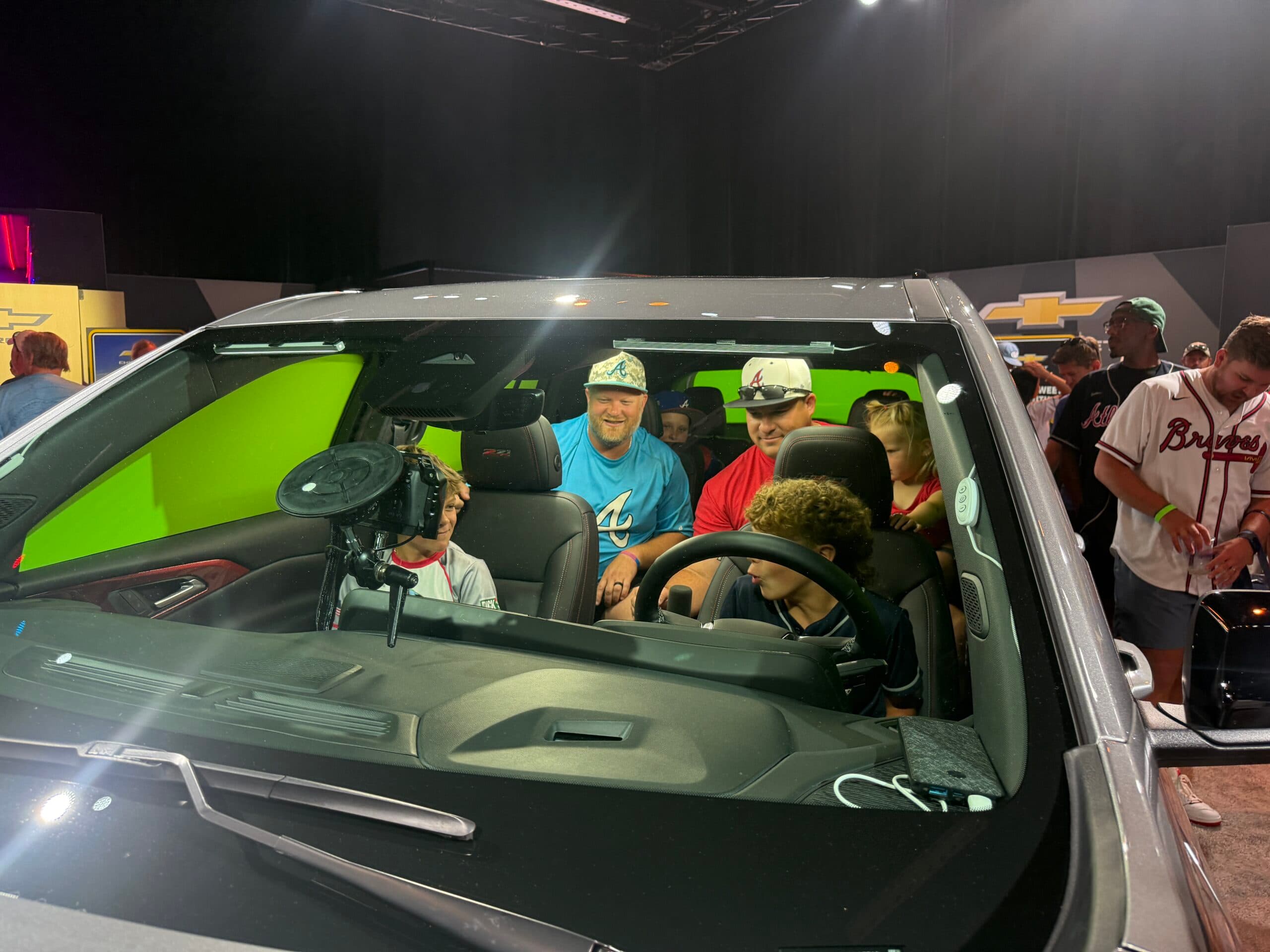
One combine-drill build scored across eight NFL training camps for USAA with 160over90. Chevrolet footprints redeployed from CMA Fest to the MLB All-Star Game to the auto-show circuit with Jack Morton, with Detroit, Los Angeles, Chicago, and New York on the 2027 calendar. A Continental Tire spin-to-win built once and run across a multi-event youth soccer season with rEvolution. For a permanent install, The Sphere purchased custom kiosks and the software outright.

All case studies

Who it fits

Four shapes of program.

Agencies with a season

A sports marketing or experiential agency running the same sponsor through eight camps, ten tailgates, or four auto shows. One SOW, one build, one crew.

Brands with a tour

A product tour or mobile activation that visits twenty cities with the same footprint and a sponsor roster that changes by market.

Permanent installs

A venue, museum, dealership, or arena that wants the kiosk and the software to stay, with hosting, content swaps, and support on a subscription.

Agency fleets

An agency that ships ten-plus programs a year and wants a licensed core, a reserved kiosk fleet, and a developer on retainer instead of a fresh quote every time.

Built once, licensed per deployment

Five proven cores sit under most of what we build.

Each one has run in the field for seasons, is maintained by our own developers, and is redeployed to a new brand with new creative, new rules, and new dates. A returning program is a license line and a redeploy, not a rebuild. A permanent install or an agency fleet can license a core outright with hosting and a support subscription.

Programs + Licensing

Trading-card engine

Capture, card designs set to the brand book, variable data, and on-site printing. Redeployed for auto, sports, and CPG programs.

Live leaderboard

Scoring rules, prize windows, team and city rankings, offline tour scoring, and jumbotron or LED views.

Capture-system software

The software on every Selfie Station, Pro Kiosk, Robot, 360, and Array: capture, AI enhancements, delivery by text, email, or QR.

Registration and data-capture backend

One guest record across QR, RFID, and kiosk touchpoints, with consent, dedupe, dashboard, and CSV or API export.

Kiosk OS

Lockdown, remote access, watchdog, health reporting, and content swaps on every unit we ship.

Built to not fail

Reliability is the product. Speed is how we deliver it.

Agencies approve our quotes next day because the last one worked. That is not luck: the same engineers who write the software run it on site, and every build goes through the same field checks before it ships.

Burn-in before it ships

Every unit runs the real program for days before it goes on a truck, in direct sun when the footprint is outdoors, so the first guest is never the first test.

Hardware watchdogs

A watchdog on the unit restarts a hung screen or app on its own, before a tour manager has to notice.

Reachable from anywhere

Every kiosk and build is reachable by our engineers, so most issues are fixed from our desk while the line keeps moving.

Offline first

Capture, scoring, and printing keep working when venue internet drops. Data syncs when the connection returns, with nothing lost.

Health dashboard during show hours

Each unit reports its status to one dashboard, so we see a problem forming before your producer does.

A spare on large deployments

Multi-unit footprints travel with a spare, and a tech on site swaps it in minutes.

No templates. Ever.

Every stop is a custom build for your client.
Your brand guidelines, not ours.

Nothing we ship is a product with your client's logo dropped on it. Each program is designed and built from scratch for the client running it, by our own local, in-house developers (nothing outsourced, nothing offshore), to the brand guidelines their marketing team already enforces. Their typefaces, their colors, their motion, their tone, their legal lines. Ours never appear, and neither does our name.

Bring the brand guidelines to the kickoff call. No formal guidelines yet? We work from your logo files and website and send a style sheet for sign-off before the build starts.

Your typography and color system

We build to the brand book: approved typefaces, exact color values, logo clear space, and lockups. No near-miss colors, no fallback fonts.

Your voice on every screen

Start screens, prompts, consent language, share pages, and texts are written in your tone, then approved by your team before anything ships.

Your motion and sound

Transitions, idle loops, win states, and audio follow your motion and sound rules, or stay quiet if the brand says so.

Your legal and compliance lines

Official rules, disclaimers, age gates, and opt-in copy placed where your counsel wants them, word for word.

Your look on the hardware

Wraps, enclosures, and fabrication finished in the brand palette and materials. Nothing on the floor says PivotXP.

Your sign-off before it ships

You review a working build, not a mockup, and approve it against your guidelines before it goes on a truck.

Program FAQ

How is a program agreement different from booking each event?

Booking each event re-quotes the same build, the same crew, and the same shipping every time, and the agency carries the risk that the vendor is available for stop nine. A program agreement commits both sides once: the event count, the licensed software, the deployment rate, the support subscription, and the payment schedule. The agency gets one SOW to approve and one number to mark up; the twelfth stop costs what the second did.

What does "licensed core" mean in practice?

Most of our builds run on a proven engine we maintain: the live leaderboard, the trading-card engine, the registration and data-capture backend, the capture-system software, and the kiosk OS. A program licenses the engine for the term. Each stop gets new creative, new rules, and new dates on the same tested code, which is why a redeploy takes days and why the software line reads as a license rather than a rebuild.

Can we start with one season and extend?

Yes. Most programs start as a single season or tour with a renewal option. The license, the kiosk fleet, and the reporting history carry into the next term, and the redeploy fee for a returning mechanic is written into the agreement up front.

Do you white-label a program?

By default. Guest-facing screens, texts, and share pages carry the client's brand, our crew is introduced as the agency's crew, and our pricing never reaches the client. The consolidated report at the end of the season is delivered in the agency's name.

What about a permanent install?

A permanent install is a program with no end date: a purchase or long-term lease of the kiosk hardware, a software license, hosting, remote monitoring, content swaps, and a support subscription with a written SLA. We have delivered kiosk and software packages as an outright purchase for venues that wanted to own the experience.

Is there a minimum?

Programs are scoped per agreement rather than from a menu. The right starting point is the number of events, the mechanic, and the budget bracket your client has set. Send those and we come back with a program structure, not a per-event quote.

Have a season on the calendar?

Send the dates, the cities, the mechanic, and your client's budget bracket. A program structure comes back before the first per-event quote would have.