Corporate Event Games · Sales Kickoffs · Summits · Conferences

Games and Leaderboards for Sales Kickoffs and Corporate Events

Replace the walk-past partner expo with something people compete in. Attendees register once, play at each station or partner booth, and every score lands on one live leaderboard for the room. PivotXP's local, in-house developers build the games, the scoring and the hardware, ship it in road cases, and run it on site or hand it to your team.

290 played
Google's AI2 Summit typing challenge, top score 150 WPM
One small case
Game server, leaderboard and Wi-Fi shipped together; the agency ran it
One record per attendee
Register once, then tap or scan at every station
Live in days
Proven formats; new mechanics in weeks, not months
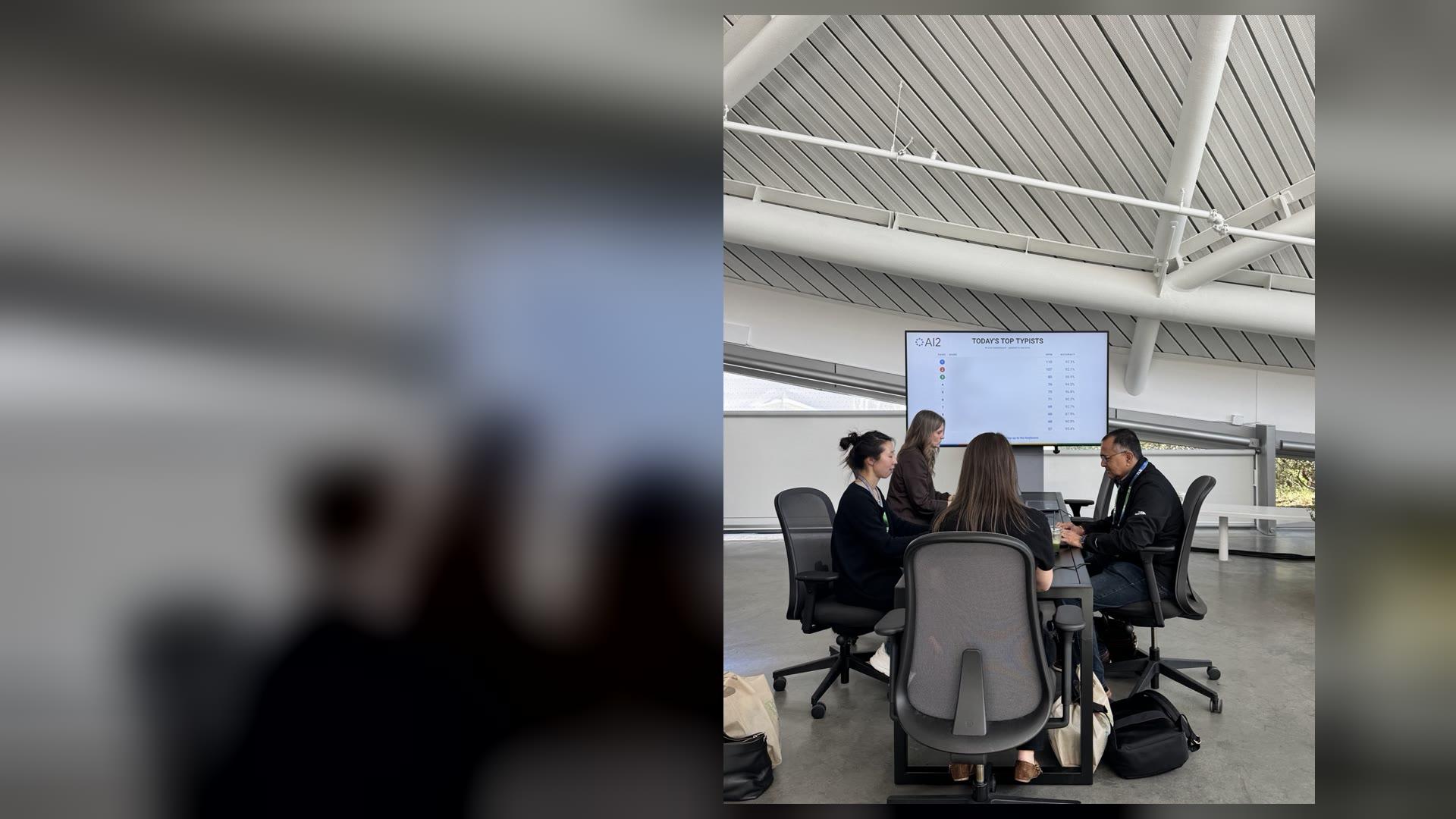
Attendees playing a speed-typing challenge under a live leaderboard at Google's AI2 Summit

What we built, with the numbers

What we have built for rooms like yours

Corporate and conference builds first, then the multi-station systems the same approach comes from. Numbers are the case study's own.

Google Typing Challenge: A Live Leaderboard Kit Shipped in a Case and Run With No Crew on Site

Google

Build 01 · AI2 Summit · Mountain View, CA

Google Typing Challenge: A Live Leaderboard Kit Shipped in a Case and Run With No Crew on Site

290
Attendees Took the Challenge
100%
Got Their Score by Email
79 WPM
Median Speed

Built: A 60-second speed-typing game on Chromebooks for Google's AI2 Summit, with Jack Morton, and a live top-10 board on a TV above the tables. The game server, leaderboard and the game's own Wi-Fi shipped in one small case, and the agency's team ran it with no PivotXP crew on site and no venue internet. 290 attendees played and every one got their score by email.

Lesson: An internal audience is competitive. Tell people when they have been passed and they come back to win their spot.

Read the case study →
INIT at APTA TRANSform: Custom Touchscreen Voting Kiosks That Let Attendees Direct a Community Gift

INIT

Build 02 · APTA TRANSform Conference & EXPO · Chicago, IL

INIT at APTA TRANSform: Custom Touchscreen Voting Kiosks That Let Attendees Direct a Community Gift

117
Votes Cast
0
PivotXP Crew On Site
100%
Votes Synced to the Cloud

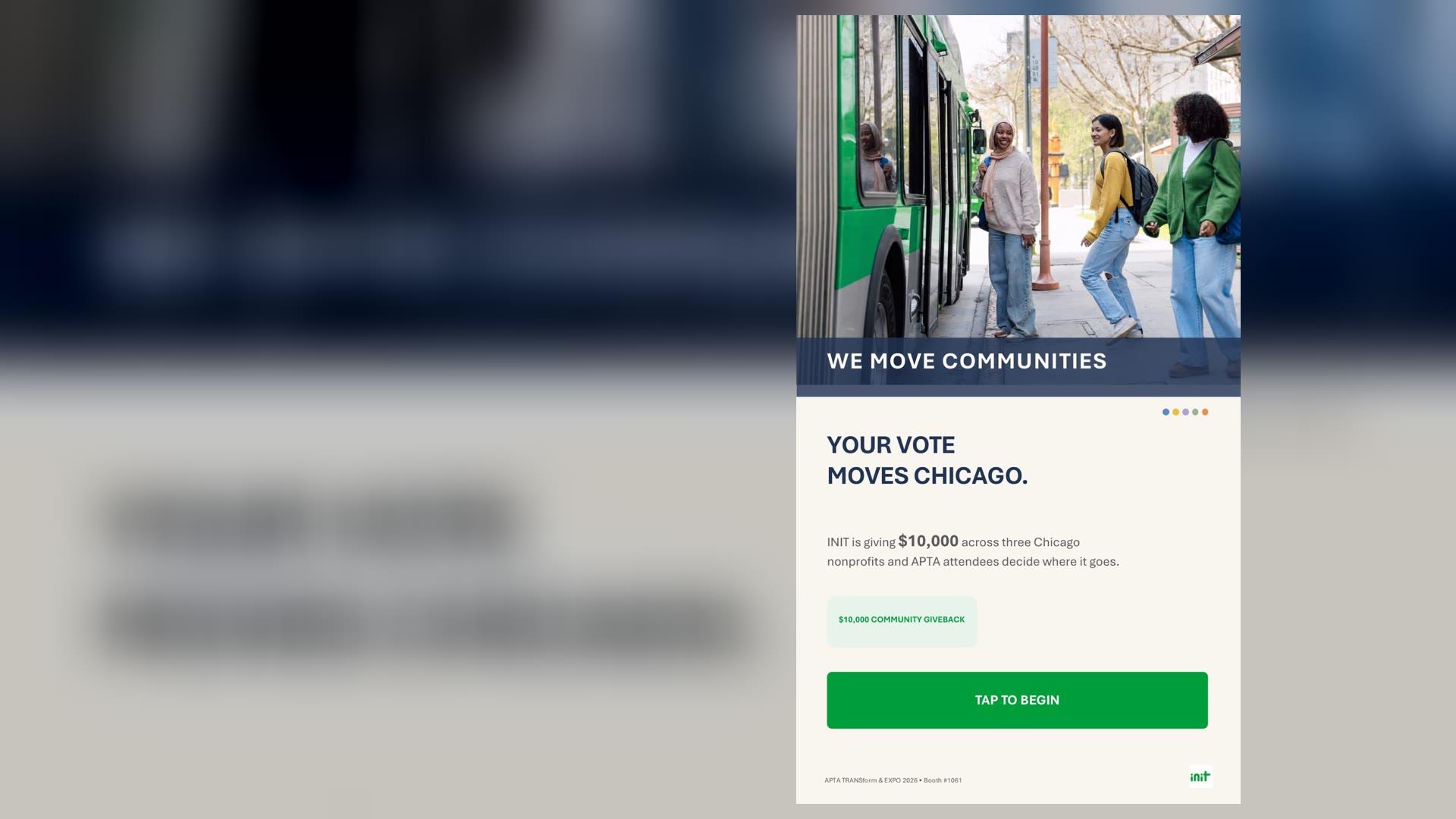
Built: Custom live polling software on two touchscreen kiosks at INIT's booth at APTA TRANSform in Chicago. Attendees voted on how a community gift would be shared; the kiosks ran on their own with no PivotXP crew on site, kept working offline, and synced all 117 votes to the cloud within a second of each tap.

Lesson: Not every station has to be a game. A vote with a live result gives people a reason to stop and a reason to come back.

Read the case study →
"Battle at the Combine" – USAA at NFL Training Camps

USAA — via 160/90

Build 03 · 8 NFL Training Camps — Nationwide

"Battle at the Combine" – USAA at NFL Training Camps

2,000
Completed Drills
8
NFL Training Camps
5
Combine-Style Challenges

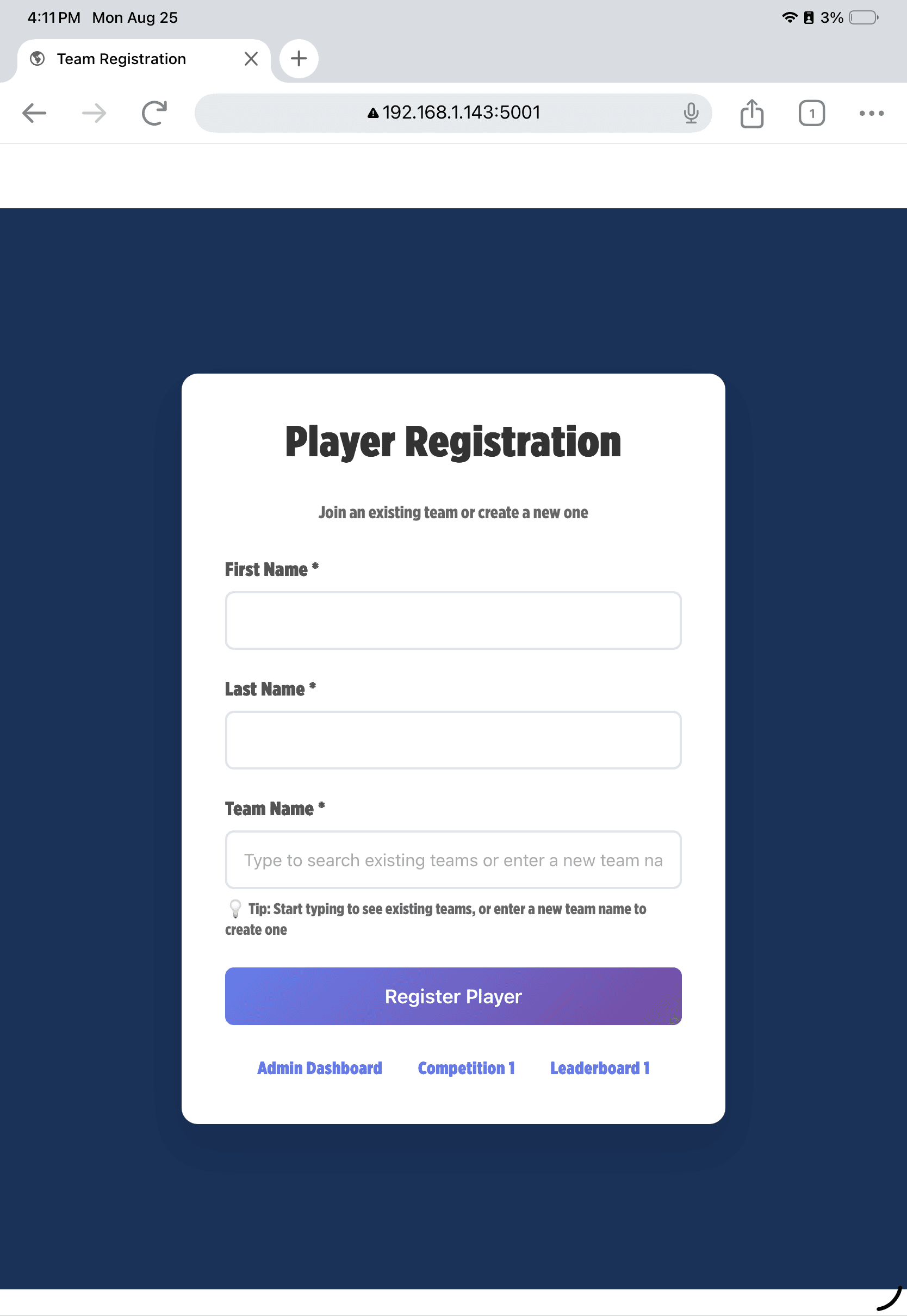
Built: A multi-station competition for USAA with 160over90: iPad sign-up with profiles and teams, five stations scored in a custom web app, and live individual and team leaderboards on a local server with no Wi-Fi dependency. 2,000 drills were scored across eight sites.

Lesson: Team scoring is what turns a row of stations into one event. Decide the teams before you design the stations.

Read the case study →
Connected by Design: Ally's Integrated Fan Experience at the ACC Women's Tournament

Ally / ESPN / Etzel

Build 04 · Duluth, GA

Connected by Design: Ally's Integrated Fan Experience at the ACC Women's Tournament

793
Gameplay Sessions
412
Photos Captured
597
Covers Printed

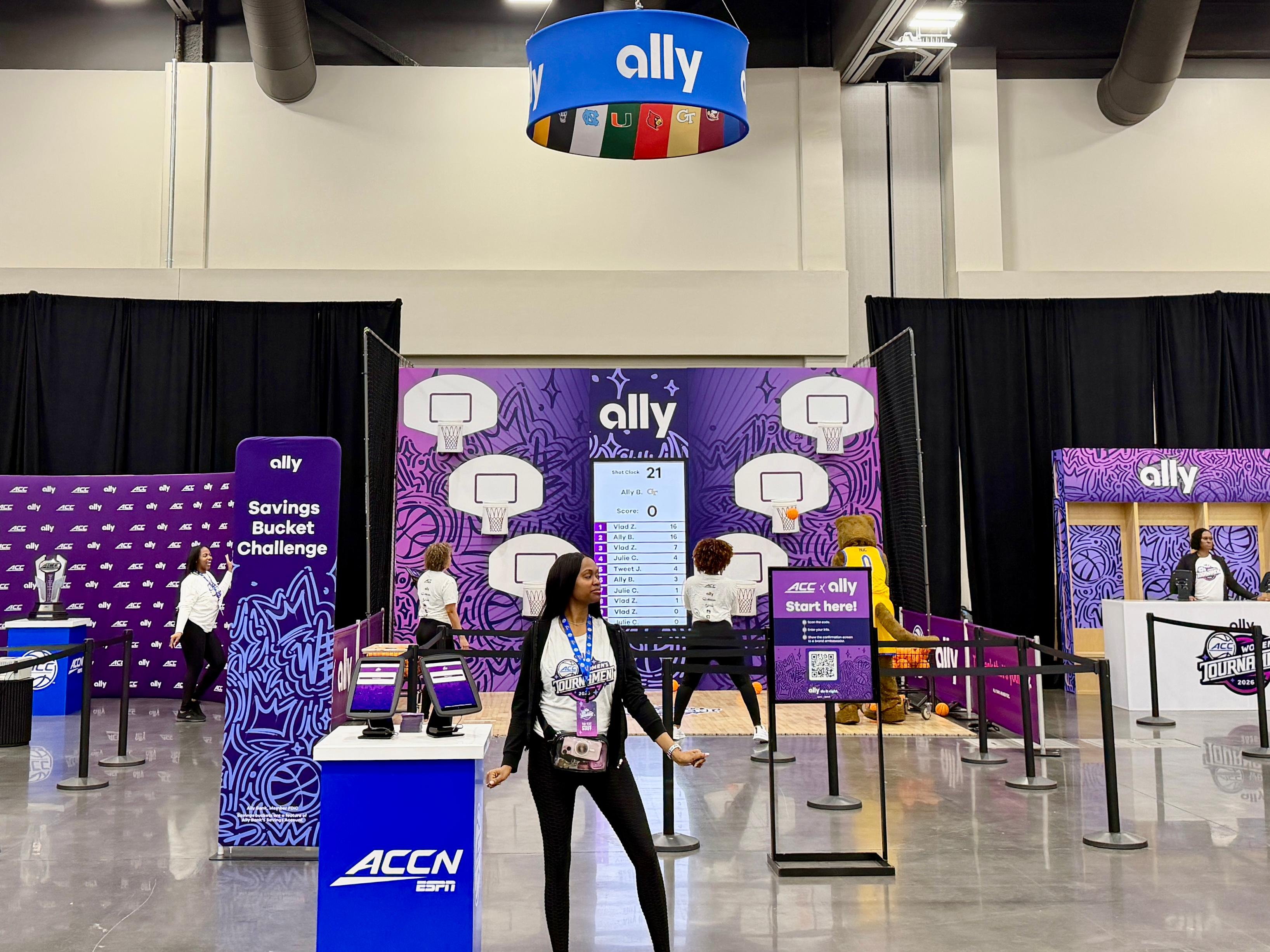
Built: A connected footprint with Etzel: guests registered once and got a card that unlocked every station, including a sensor-scored game with a live top-ten leaderboard and two photo experiences. The system logged 793 games, 412 trophy photos and 597 printed covers.

Lesson: One credential for every station is what makes the data usable afterward. One person, one record, every stop.

Read the case study →

Formats that fit a kickoff or a conference

Every one is custom to your brand guidelines and your message. These are the shapes that work for an internal or partner audience.

Partner station challenge

Each partner or product team gets a station with its own short game or task. Attendees tap in, play, and collect points toward one board.

Team versus team

Regions, segments or product lines compete. Affiliation comes from registration and the board ranks people and teams side by side.

Speed and skill games

Typing, reaction, timed product challenges and trivia that take a minute to play and are easy to rank.

Live polls and votes

Touchscreen voting with a live result on the big screen, for general sessions and booth moments.

Passport and completion tracking

Visit every station to unlock a prize or a drawing entry, tracked by RFID wristband, badge QR or card.

Main-stage reveal

The board feeds the general-session screen so leadership can call out the leaders and close the loop on stage.

What ships in the cases

  • The games, built to your brand guidelines and your product or sales message
  • One registration for the event, with RFID wristbands, cards or a badge QR as the credential
  • A scoring engine with your rules: points per station, team totals, tie-breaks and prize windows
  • Live leaderboards sized for booth TVs, LED walls or the general-session screen
  • A local server so it runs without the hotel or venue network, with a bonded cellular kit when it needs to be online
  • Touchscreens, tablets, buttons and sensors as the stations need, burned in before they ship
  • A results export: who played what, completion by station, and scores by person and team

For a booth on a show floor rather than your own event, see custom trade show games. For the tap-at-every-station system on its own, see multi-activation footprints.

How a build goes

  1. 1. Send the brief

    The event, the dates, the headcount, how many stations or partners, and what you want people to remember.

  2. 2. Scoped estimate, same day

    A line-item estimate with the stations, the scoring and the hardware named.

  3. 3. Build and play-test

    Proven formats go live in days. New mechanics get a playable prototype so your team can try it before the event.

  4. 4. Ship or staff

    Cases ship with a setup guide and video for your team, or PivotXP techs run it on site.

  5. 5. Report

    Scores, completion by station and the attendee export, ready for your recap.

No templates. Ever.

Every deployment is a custom build for your company.
Your brand guidelines, not ours.

Nothing we ship is a product with your logo dropped on it. Each program is designed and built from scratch for the brand running it, by our own local, in-house developers (nothing outsourced, nothing offshore), to the brand guidelines your marketing team already enforces. Your typefaces, your colors, your motion, your tone, your legal lines. Ours never appear.

Bring the brand guidelines to the kickoff call. No formal guidelines yet? We work from your logo files and website and send a style sheet for sign-off before the build starts.

Your typography and color system

We build to the brand book: approved typefaces, exact color values, logo clear space, and lockups. No near-miss colors, no fallback fonts.

Your voice on every screen

Start screens, prompts, consent language, share pages, and texts are written in your tone, then approved by your team before anything ships.

Your motion and sound

Transitions, idle loops, win states, and audio follow your motion and sound rules, or stay quiet if the brand says so.

Your legal and compliance lines

Official rules, disclaimers, age gates, and opt-in copy placed where your counsel wants them, word for word.

Your look on the hardware

Wraps, enclosures, and fabrication finished in the brand palette and materials. Nothing on the floor says PivotXP.

Your sign-off before it ships

You review a working build, not a mockup, and approve it against your guidelines before it goes on a truck.

Proof, not promises

The case studies

A summit game an agency ran from one small case, voting kiosks that ran unattended, and a team competition scored offline across eight sites.

All case studies

What’s on the quote

What's on a corporate event game quote.

No mystery line items. Every estimate is built from this list, so you can see what the build covers and what is optional.

Every estimate is built from these same lines, so nothing shows up on the quote that you have not seen here. Send dates, city, and what you need and you will have a line-item estimate the same business day.

Game or station software

One fixed build fee per mechanic, built to your brand guidelines.

Scoring engine and leaderboards

Your rules, team totals, ranked displays and exports.

Registration and credentials

Event registration plus RFID wristbands, cards or badge QR.

Station hardware

Touchscreens, tablets, buttons and sensors, itemized. Your AV partner can supply displays.

Local server and connectivity

On-site server for offline play; bonded cellular or Starlink when it must be online.

PivotXP techs on site

Optional, priced per day. Many builds are run by the client or agency team.

Shipping and travel

Quoted round trip; travel billed at cost only when we send a tech.

How custom builds are quoted

What a custom build quote contains.

A custom interactive is a software product with hardware attached, and the quote reads that way: a fixed price for the scoped build, hardware itemized as pass-through, and the deployment, support, and change-order terms written down before anyone starts.

Nine lines, always in this order, so you can compare two of our quotes against each other and never against a booth rental. Send the concept deck and a budget bracket and the first version comes back the same business day.

1. Discovery and experience design

The brief becomes a build spec: guest flow, screens, scoring or capture logic, data fields, and the hardware list. Waived on returning accounts, but it always appears.

2. Software build

One fixed fee for the scoped build, with the complexity tier named: a new skin on an existing engine, a new interaction with data capture, or a multi-mode build with sensors, AI, or integrations.

3. Hardware

Itemized as pass-through: screens, kiosks, readers, sensors, printers, cases. Your team or your fabricator can supply any of it.

4. Deployment, burn-in, and configuration

Kiosk prep, pre-ship test, and the burn-in run on the real program before it leaves.

5. On-site technician days and travel

Priced per tech per day at one rate for every client; travel at cost with a range quoted up front.

6. Shipping and road cases

Round trip, parcel or freight, with return labels.

7. Post-event support window

Remote support for a set window after the event, with an optional hosting and support subscription for programs that keep running.

8. Change orders and rush terms

Written before the work, at a rate printed in the contract. Nothing is "not a problem" without a line, even when that line is waived.

9. Contingency

Added when your procurement matrix asks for one, shown as its own line.

Lead times

How much runway each kind of project needs.

Kiosk or Starlink rental

Ships the next business day after the contract is signed, timed to arrive before your setup date.

Brand an existing kiosk

Days once your art arrives. Wrap art, overlays, share page, and AI creative. Art specs sent at kickoff.

Custom software build

Days for a proven format, a few weeks for something new. Local, in-house developers, never outsourced, scenario-tested before it ships.

Hardware + software concept

Weeks, not months. Software and sensor integration in house; fabrication gets a real date at the quote stage.

Clickable prototype for a pitch

Days. Enough to win the room before anything is built.

Tight timeline? Say so on the form. Rentals and returning programs move in days; we will tell you honestly what a new build can hit.

FAQ

Can you gamify a sales kickoff or a partner expo?+

Yes. PivotXP builds station games, team scoring and live leaderboards for corporate events. Attendees register once, play at each partner or product station, and every score lands on one board for the room.

How many attendees can it handle?+

It is sized to the room. The number of stations and how long each game takes set the throughput, so tell us the headcount and the schedule and we will size it. At Google's AI2 Summit, 290 attendees played a single game across two days.

Does it need the hotel or venue Wi-Fi?+

No. The games and the leaderboard can run on a local server we ship, as they did at Google's summit and at eight USAA sites. When the board needs to be online we add a bonded cellular or Starlink kit.

Can each partner or sponsor have its own station?+

Yes. Each station can carry a partner's brand and its own game or task, while all of them score into one system. You get completion and play counts per station for partner recaps.

Can teams or regions compete against each other?+

Yes. Team, region or segment is captured at registration, and the board can rank individuals and teams side by side, with totals that carry across days.

Do you run it on site?+

Either way. PivotXP techs can run it, or we ship it with a setup guide and video for your team or agency. Google's summit game was run by the agency's team with no PivotXP crew on site.

How far ahead do you need the brief?+

Proven formats go live in days once brand assets arrive. New mechanics take weeks, not months, because our developers are in house. Send the dates and we will tell you what fits.

What does it cost?+

Every quote is built from the lines on this page: the game builds, scoring, registration, hardware, connectivity, shipping and optional staffing. Send the event details and you will have a line-item estimate the same business day.

Planning a kickoff or a summit? Send the brief.

Dates, headcount, how many stations or partners, and the message. You will have a scoped, line-item estimate the same business day.