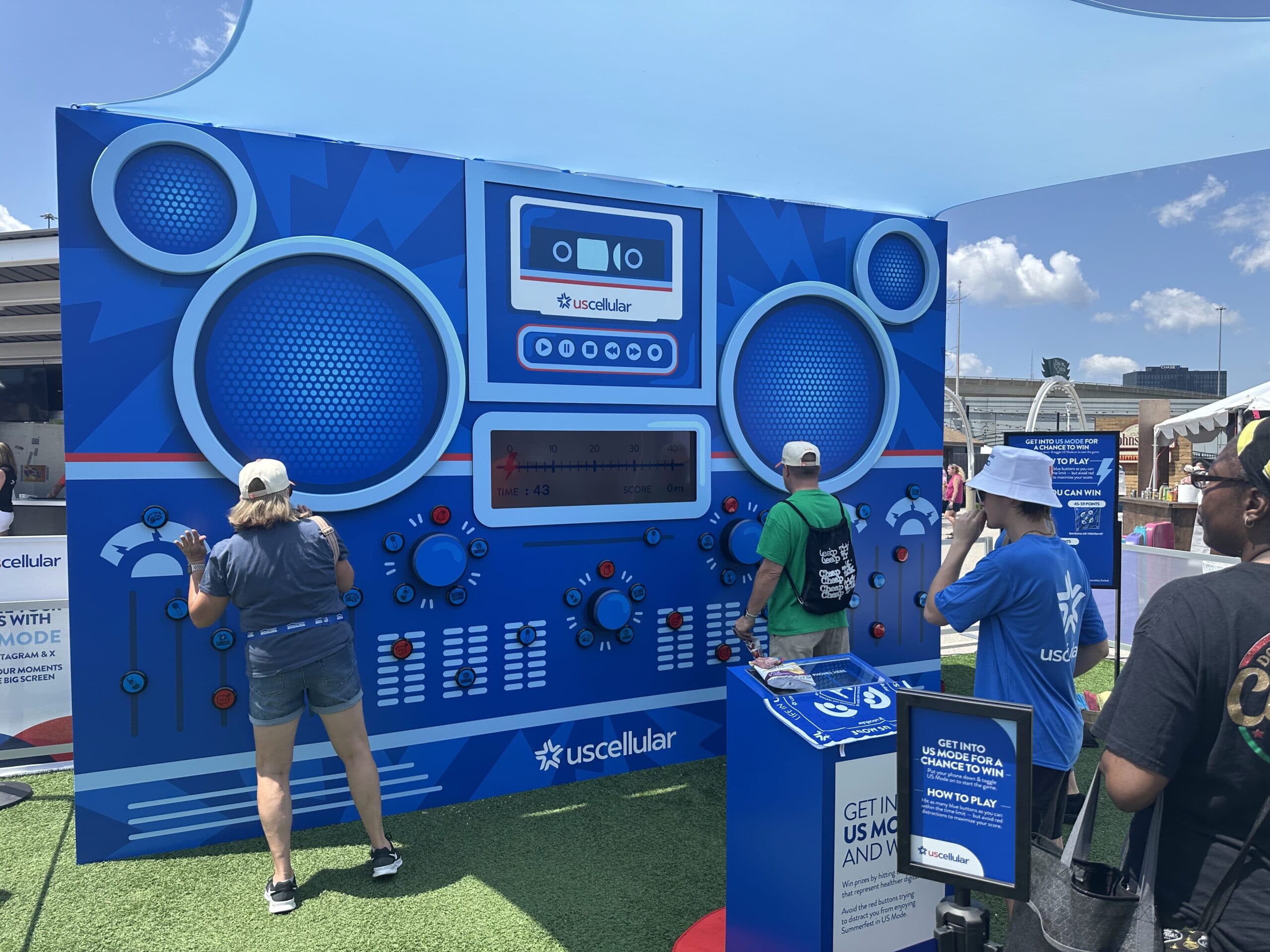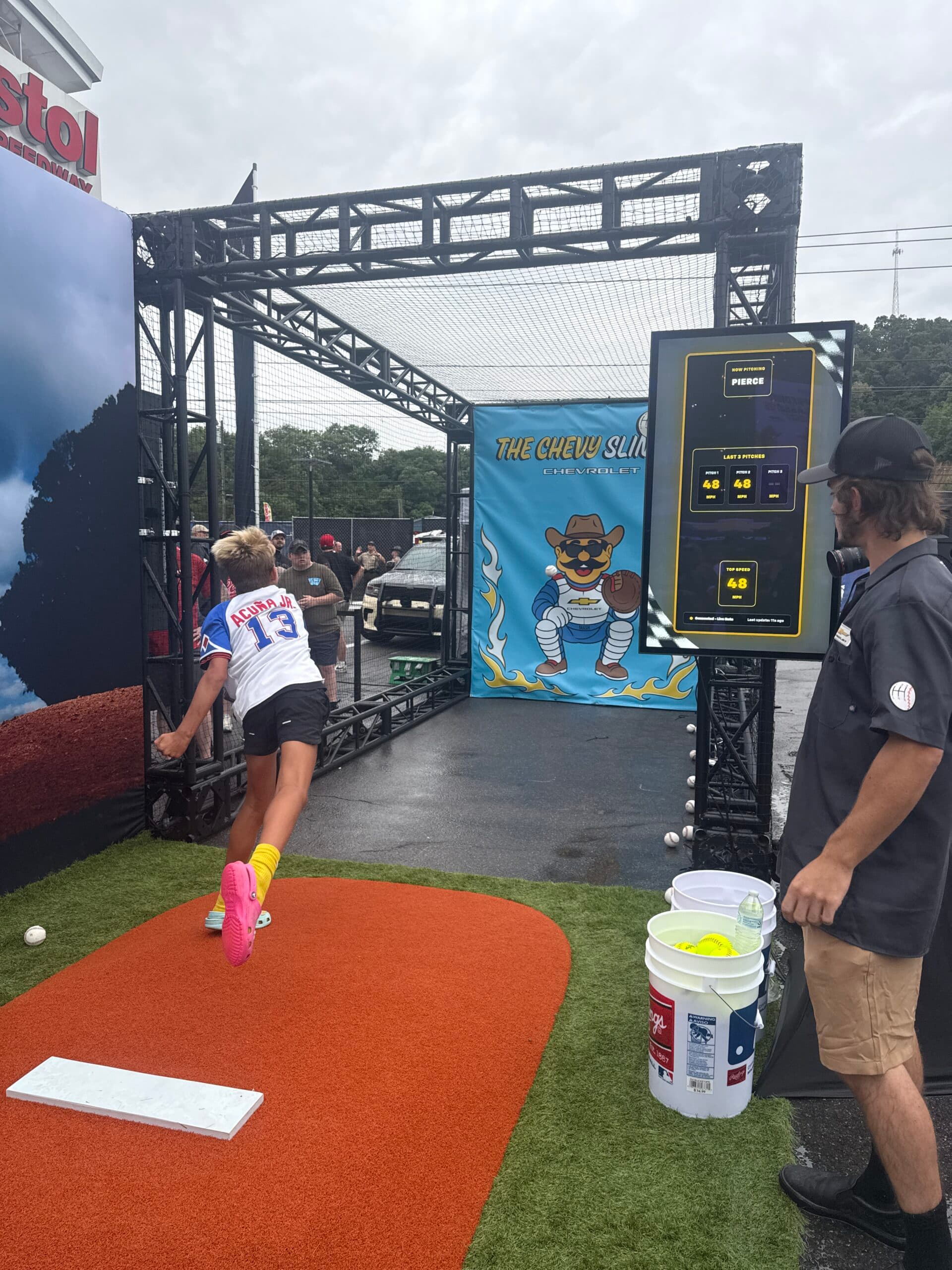
Most of the activations we build start the same way: an agency producer forwards a concept deck with a one-line note that says some version of "the client loves it, can we do this, and what does it cost?" That deck is enough for us to send back a line-item estimate within a business day. But the programs that ship cleanly are the ones where a few more facts arrive with it. None of them are hard to find. All of them save a week later.
1. The dates, and which ones are real
Show dates are obvious. What we actually plan against is the load-in window, the first live hour, and the strike. A kiosk that ships the next business day needs a receiving address and a person who will sign for it. A custom sensor game is weeks of build, not months, because our developers are in house, plus a few days of scenario testing, so the date that matters is the one the creative is due. Tell us which dates are locked and which are still moving, and we will build the timeline around the locked ones.
2. The venue, with a photo of the footprint
Indoor arena concourse, outdoor fan fest, convention hall, a truck on a multi-city tour. Each one changes the answer on power, internet, and what the unit has to survive. A single photo of the space, or a screenshot from the venue's site, answers half the questions we would otherwise ask on the kickoff call. If there is no reliable internet, say so now; a Starlink or bonded cellular kit is a line on the quote, not a surprise on show day.
3. The number the client will judge it by
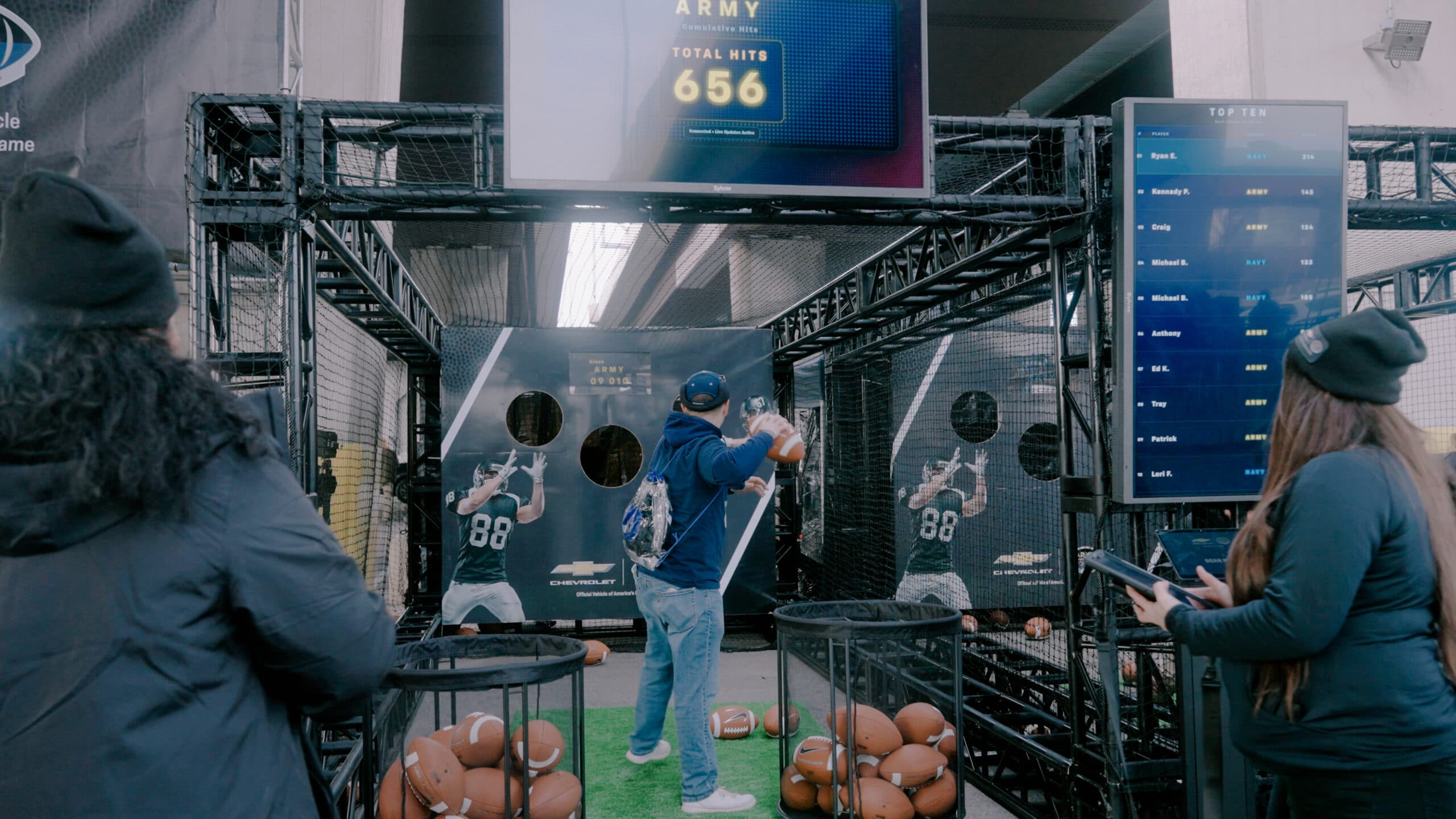
Opt-ins, outputs delivered, shares, dwell time, plays per guest. Every case study on our site leads with one number because that is the number the client asked about afterward. Knowing it up front shapes the build. If the goal is a list, registration goes on the first screen and the game is the reward. If the goal is shareable content, delivery speed and the share page get the attention. When we built the Chevy throw walls for the Army-Navy game, the brief was participation, so every throw landed on an RFID-bound profile and a joint Army-versus-Navy leaderboard; 1,739 footballs later, the client had the number.
4. Whose hardware, and whose crew
Two questions decide a large part of the budget. First: are we shipping a preconfigured unit for your tour manager to unfold, or is a PivotXP tech coming with it? Both are standard; the second adds a per-day line and travel at cost. Second: do you or the client already own kiosks, iPads, or a video wall we should deploy to? Software-only is a normal job for us, and it removes the hardware rental from the quote entirely.
5. The brand kit, even a rough one
Logos, colors, type, and any key art. For an AI photo op this matters more than anything else on the list, because the prompt set is built against the guidelines and test-rendered until the outputs hold. For a leaderboard or a kiosk wrap, a rough kit at concept stage lets us send back a mockup with the estimate, which is usually what wins the room.
6. What the client's legal or procurement team will ask
Sweepstakes need official rules and an audit trail. Regulated brands want a data-flow statement, retention policy, W-9, and certificate of insurance. AI programs need consent language that names the AI use. We have all of this ready as a vendor packet; telling us early which of it the client will want means it arrives with the proposal instead of after the contract.
What can wait
- Final creative. We send the template pack at kickoff; a branded kiosk ships within days of approved art.
- Exact quantities of prints or takeaways. We quote per output type and true up after the program.
- Staffing decisions. Ship-or-staff can flip up to a couple of weeks before load-in on most rentals.
- The client's CRM details. Exports are CSV by default; a direct push is configured once we know the platform.
Send the deck and whatever of the six you have. We will tell you what is feasible, what it costs line by line, and what we would change to make it survive the venue. Then you go win the pitch.